

I’ve been to Disney World twice in my life and while I don’t remember every detail of either trip, I can remember specific rides and meet and greets I enjoyed.
Going to the parks for the first time was a huge treat for my sister Grace and I, and based on the pictures, it was a pricey one. Grace and I participated in the Bibbidi Bobbidi Boutique experience before attending a dinner at the Beast’s castle, from Beauty and the Beast. This experience was captured through professional photography and our own memories and resulted in our love for Disney to grow stronger. Despite only having gone to Disney World once before, my sister and I couldn’t have been any more excited to share our next experience with our younger siblings a few years later. Our family, of now six, went to Disney World in 2018 and because it was Grace and I’s second time being there we knew which experiences we didn’t want to miss out on and which characters we really wanted to meet.
I think back on these trips and am reminded that they will always be core memories for me and my family. I am glad to have met characters such as Tiger, Pooh, Elsa, Anna, Chip, Dale and so many more rather than have season passes to an amusement park every summer. The attention to detail at every booth and ride increases the emotions that are connected and drive audiences to purchase admission to the Parks.
This is a Experience Economy
According to B. Joseph Pine II and James H. Gilmore at the Harvard Business Review, Walt Disney was the experience-economy pioneer. Pine and Gilmore define experience economy as “an experience occurs when a company intentionally uses services as the stage, and goods as props, to engage individual customers in a way that creates a memorable event”. The Disney franchise continues to thrive because they continue to be innovative with the ways they provide services such as customer service and dining. Experience economy is very dependent on having money to create designs that spark emotions and memories for guests.
The best way to explain how a business builds up from a commodity to full body experience is with an example. Think about Disney’s Winnie the Pooh franchise:
Commodity (raw material): The original children’s book based on the real-life story of the black bear and Canadian Soldier.
Goods (manufactured products): Toys, stuffed animals, books, and party favors of Winnie the Pooh and Friends.
Services (themed interactions and experiences): Winnie the Pooh and Friends birthday parties, TV Show and movie adaptations.
Experience (Immersive Interaction): Going to Disney World’s Hundred Acre Wood’s area to meet characters and riding the The Many Adventures of Winnie the Pooh attraction.
Shopping at Disney’s World’s Hundred Acre Goods store could be considered either a service or experience because it is designed to feature the Winnie the Pooh characters and goods but there are no real life characters in the store. But lets take a take a look at the design elements that help guests still feel they are still in the Winnie the Pooh world.
Disney’s Designs
Disney Imagineer’s are on a different level when it comes to innovation and creativity. Imagineer’s explain, “Whether it’s new ride systems or specialty paint finishes, fireworks or fire alarms, visual effects or lighting fixtures, trees or trash cans, we set down on paper (or more likely, in a digital model) exactly how we want to see it made. And we define materials and methodologies that will make it real”. Just in the six minute video of the Fantasyland Gift Shops exemplifies the amount of detail put into each location at the parks.
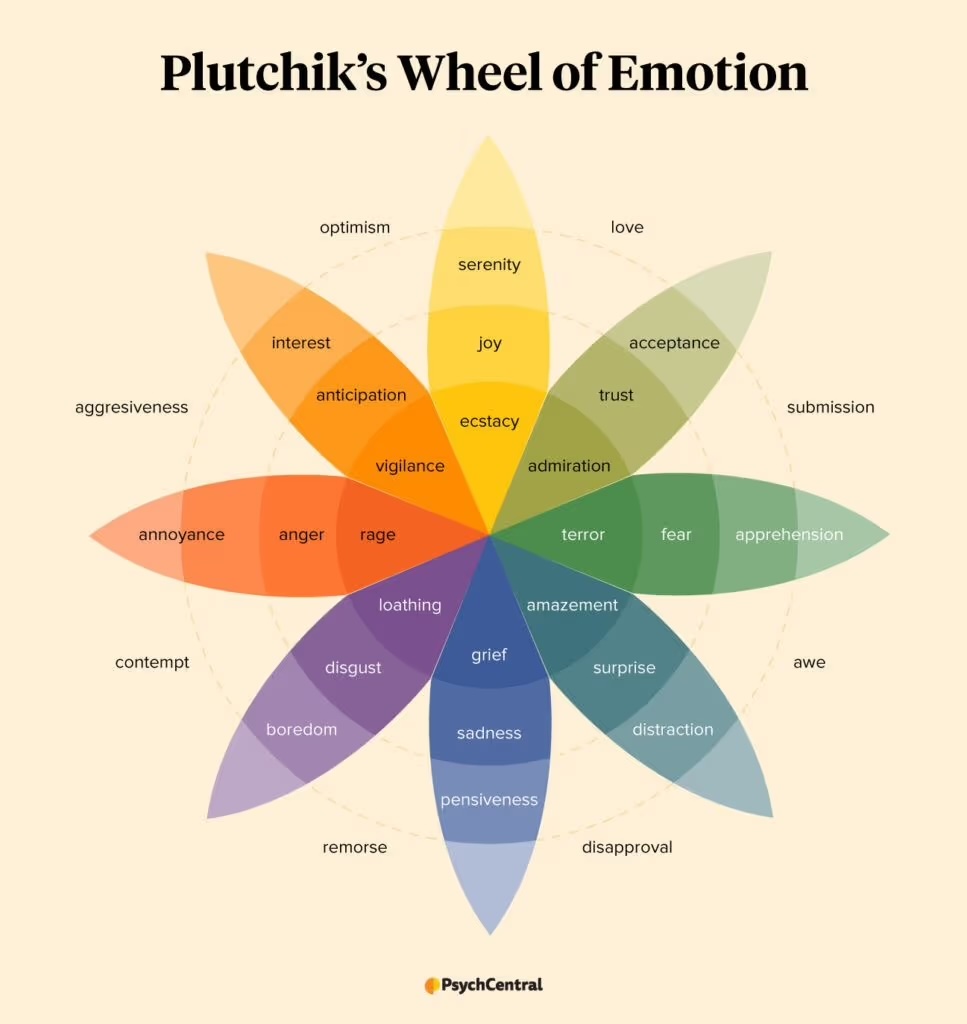
There are many elements to design but I specifically am drawn to look at the colors and typography that is used in the Hundred Acre Goods building. Sophia Bernazzani Barron at hubspot explains that script fonts, such as Comic Sans, Kristen, and Lucida are typefaces that remind viewers of handwriting. The letters on the Hundred Acre Goods sign look to be carved, as if Christopher Robin wrote them, and can be associated with emotions such as a “exciting”, “happy”, “cuddly”, and “youthful”. The color choices are similar to those that could be found in the woods that Christopher Robin is written to play with Pooh & Friends in. Plutchik’s Wheel of Emotions helps designers and marketers understand the emotions that are associated with colors brands choose to include in their designs. There are 8 basic emotions that get combined together to curate new emotions. According to the visual below, light green, from the signs background, could evoke the feelings of trust and the deep teal leaves can be associated with the feeling of amazement. Don’t forget the importance of context when color is interpreted. The color red does not always always radiate negative energy but it is the primary feeling so color combinations make a difference.
For example, Winnie the Pooh is a joyful yellow character who wears a cropped red shirt and this doesn’t mean they would be described as a angry, annoyed or rageful character.
See you next time!
Focusing on creating a memorable experience for guests of all ages, genders, races, and abilities through detailed designs has helped Disney theme parks remain the leading experience economy business. As they evolve, with hopefully new stories not just remakes, they will continue creating cherished memories for years to come.
 Maeve Catherine
Leave a comment